

The Hidden Connection Between Anxiety, Control, and Resentment
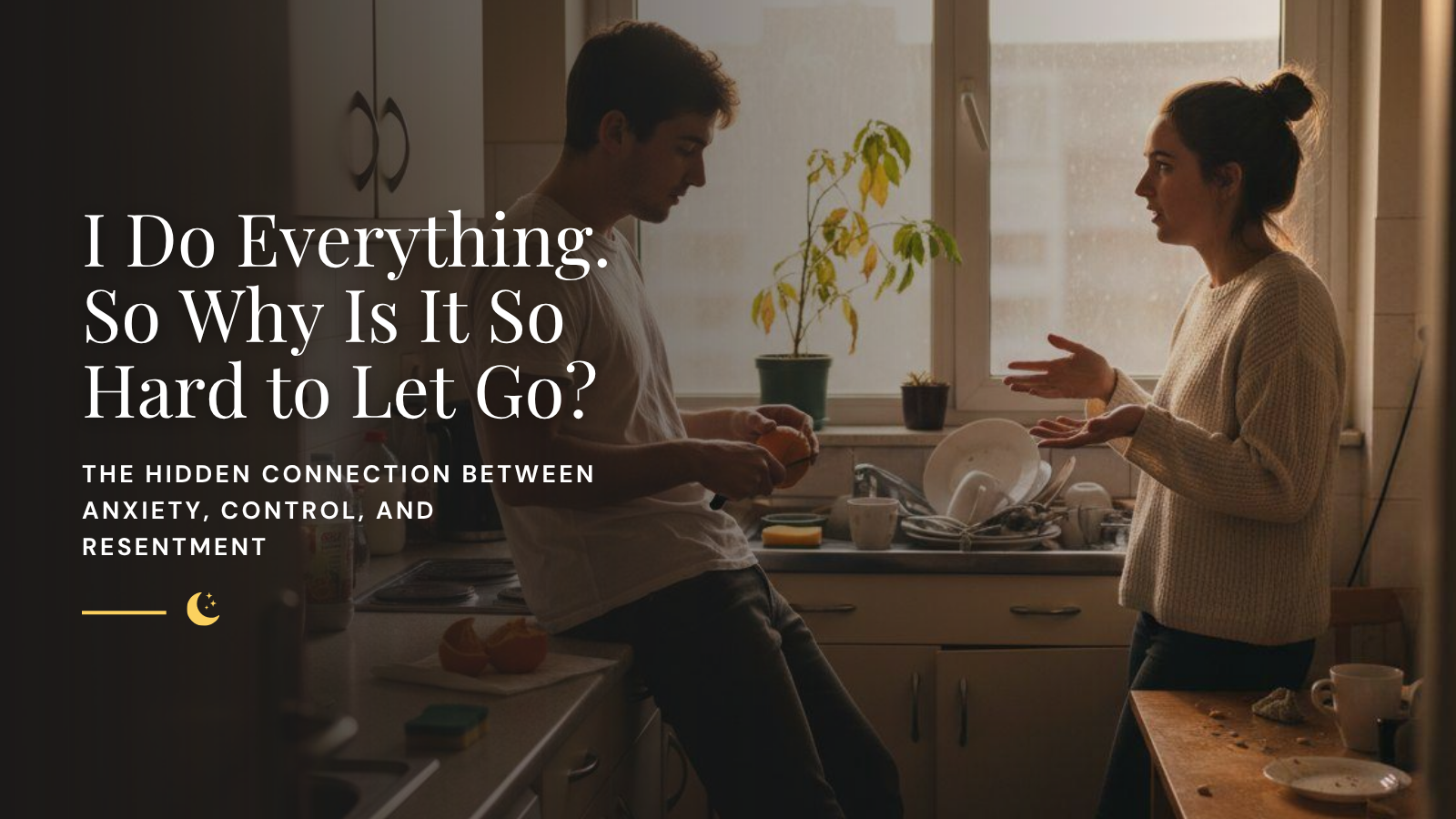
You're exhausted from doing everything.
The planning. The remembering. The decisions. The details no one else seems to notice until something goes wrong.
Then someone offers to help.
Your partner takes over a household task. A coworker volunteers to handle something. A friend offers to organize the plans for once.
You should feel relieved, right?
Instead, you feel anxious.
What if they forget something? What if they don't do it the way you would? What if it's easier to just handle it yourself?
So you step in. You check. You correct them. Sometimes, you take the whole thing back.
And then comes the resentment.
Why am I always the one who has to do everything?
It's an exhausting contradiction. You desperately want someone to take something off your plate, but letting go can feel even harder than doing it yourself.
For some women, anxiety or OCD may be playing a bigger role in this cycle than they realize.
When Being in Control Feels Safer Than Letting Go
Control isn't always about wanting things your way.
Sometimes, it's about trying to prevent something from going wrong.
When you struggle with anxiety, uncertainty can feel uncomfortable or even threatening. Taking charge, anticipating problems, and making sure everything is done correctly may provide a temporary sense of relief.
You know what's happening. You know what to expect. You know it's being handled.
The trouble is that the relief doesn't always last.
Over time, your mind can begin to associate being responsible for everything with feeling safe.
And suddenly, handing something over to someone else doesn't feel like receiving help. It feels like introducing another thing to worry about.

The Cycle of Control, Resentment, and Guilt
Here's where things get complicated.
You take on more because it feels easier than trusting someone else to handle it.
Eventually, you're overwhelmed and frustrated that no one seems to recognize how much you're carrying.
You may become short with your partner, irritated with a coworker, or quietly resentful toward a friend.
Then comes the guilt.
You know they probably meant well. You recognize that you might have been overly critical. You wonder why you couldn't just let something go.
So you turn that frustration inward, promise yourself you'll handle things differently, and eventually find yourself doing it all over again.
The cycle can look something like this:
Anxiety → Taking Control → Temporary Relief → Exhaustion → Resentment → Guilt → More Anxiety
And because taking control briefly reduces the discomfort, it can be difficult to recognize how much the pattern is costing you.
Sometimes that pattern also contributes to the kind of emotional exhaustion that doesn't go away after resting.
Why "Just Let Someone Help" Isn't Always That Simple
If you've ever been told to delegate more or stop worrying so much, you probably know how unhelpful that advice can feel.
Because the issue isn't always the task itself.
It's the uncertainty that comes with trusting someone else to handle it.
And sometimes, there's another reality worth acknowledging: you genuinely are carrying an unfair amount of responsibility.
A partner who waits to be told what needs doing isn't necessarily sharing the mental load. A coworker who repeatedly misses deadlines creates real work for everyone else.
Not every frustration is anxiety. Not every expectation is unreasonable.
But when anxiety is involved, it can become harder to distinguish between a situation that genuinely needs your attention and one where your mind is struggling to tolerate a different outcome.
Both deserve attention.
When Anxiety or OCD Adds Another Layer
For some women, the need for control goes beyond wanting things done correctly.
There may be persistent thoughts about what could happen if something gets missed, overlooked, or done differently.
What if I don't check and something goes wrong?
What if it's my responsibility to prevent that?
What if I should have known better?
With OCD, these fears can sometimes lead to repetitive checking, seeking reassurance, mentally reviewing decisions, or taking over tasks to reduce distress.
The relief may feel real in the moment, but it often fades, bringing the doubt right back.
Of course, wanting control doesn't automatically mean you have OCD. Anxiety, perfectionism, relationship dynamics, and life experiences can all influence these patterns.
What matters is understanding what's driving the behavior and whether it's creating more distress than relief.

Learning to Let Go Without Feeling Like Everything Will Fall Apart
Letting go doesn't mean becoming careless, lowering every expectation, or accepting an unfair division of responsibility.
It means beginning to recognize when anxiety is making decisions for you.
Maybe that looks like allowing your partner to complete something differently than you would, without immediately correcting it.
Maybe it's having an honest conversation about shared responsibilities instead of silently taking on more.
Or maybe it's noticing the urge to step in and asking yourself whether something truly needs your attention or whether uncertainty is making you uncomfortable.
These shifts aren't always easy, particularly when control has become a way of managing anxiety for years.
And that's something therapy can help you explore.
You Don't Have to Be Responsible for Everything
You can care deeply about your relationships without managing every outcome.
You can have high standards without carrying every responsibility.
And you can begin to build trust in yourself and others without needing everything to feel completely certain first.
At Crescent Moon Therapy, I work with women across Washington State who are navigating anxiety, OCD, perfectionism, burnout, and the emotional weight of trying to hold everything together.
Through online anxiety therapy, we can explore the patterns keeping you stuck, work toward healthier boundaries, and find ways to create more space for yourself and the relationships that matter to you.
You deserve relationships that feel supportive, not like another thing you have to manage perfectly.
If this sounds familiar, schedule a free consultation to see if therapy feels like the right fit for you.