

How Anxiety and OCD Can Turn Relationship Tension Into
Overthinking, Guilt, and Self-Doubt

The conversation ended hours ago.
But in your head, it's still happening.
Maybe you disagreed with your partner. Maybe a coworker seemed irritated. Maybe a friend responded differently than you expected.
Now you're replaying what you said, questioning your tone, or wondering whether you should apologize.
Or maybe you're still angry. You're mentally rehearsing everything you wish you'd said or imagining what you'll say the next time it happens.
Either way, the interaction is over, but your mind hasn't moved on.
Sometimes the hardest part of a difficult conversation isn't the conversation itself. It's everything that happens in your head afterward.
For women navigating anxiety or OCD, these mental loops can become exhausting, especially when the relationships involved are the ones they care about most.
When Your Mind Won't Let a Conversation End
It's natural to think about conversations afterward, particularly when something felt uncomfortable or unresolved.
But there's a difference between reflecting on an interaction and feeling unable to stop analyzing it.
You might replay someone's exact words, examine their facial expressions, or question whether you came across the wrong way.
Maybe you keep going over an argument, trying to figure out who was right, who was wrong, or what you could have done differently.
This repetitive thinking is often called rumination.
And while it can feel like you're working toward a solution, sometimes you're simply going in circles.

Why Anxiety Can Make Relationships Feel So Complicated
When you care deeply about the people in your life, the possibility of upsetting someone or being misunderstood can feel particularly uncomfortable.
Anxiety can make those moments feel more significant than they otherwise might.
You may find yourself:
Rereading messages to figure out what someone's tone really meant.
Apologizing repeatedly, even when you're unsure you've done anything wrong.
Mentally rehearsing conversations before they happen.
Assuming someone is upset because they seem quieter than usual.
Feeling irritated or defensive, then questioning whether your reaction was justified.
Underneath these behaviors is often a desire to feel secure in your relationships.
You want to know things are okay.
The difficult part is that relationships don't always offer immediate answers, and anxiety doesn't particularly like uncertainty.
When Overthinking Turns Into Guilt or Resentment
Not everyone experiences relationship anxiety the same way.
For some women, the discomfort turns inward.
They question themselves, assume responsibility for someone else's feelings, and spend hours wondering whether they handled something badly.
For others, the frustration turns outward.
They feel misunderstood, become resentful, or mentally build a case for why the other person was wrong.
Sometimes, both happen.
You feel angry about how someone treated you, then guilty for being angry. You question whether your feelings are reasonable, then become frustrated that you're questioning yourself at all.
And the longer you stay in that mental back-and-forth, the harder it can become to move forward.
When Relationship Rumination Is Connected to OCD
For some women, repeatedly reviewing interactions can be part of OCD.
OCD doesn't always involve visible rituals or behaviors. Sometimes, compulsions happen entirely in your mind.
You might repeatedly analyze a conversation to make sure you weren't hurtful, check your memories for evidence that someone is upset, or seek reassurance that your relationship is okay.
The goal is often to feel certain.
Certain you didn't say the wrong thing. Certain someone isn't angry. Certain you haven't damaged a relationship.
And when you finally feel reassured, that relief may only last a little while before another doubt appears.
This is one reason reassurance can become part of the cycle, whether it comes from another person, repeatedly checking messages, or mentally reviewing what happened.
Of course, overthinking a conversation doesn't automatically mean you have OCD. What distinguishes OCD is the broader pattern of intrusive thoughts, distress, and compulsive attempts to find relief or certainty.
Recognizing that pattern can be an important first step toward changing it.

Not Every Uncomfortable Feeling Needs to Be Resolved Right Away
Sometimes a difficult conversation genuinely needs a follow-up.
Maybe a boundary needs to be communicated, an apology is appropriate, or something important was left unsaid.
But other times, the urge to revisit an interaction is less about resolving a problem and more about trying to make an uncomfortable feeling disappear.
And those are two very different things.
Learning to recognize that difference can help you respond more intentionally rather than feeling pulled into another round of analyzing, checking, or seeking reassurance.
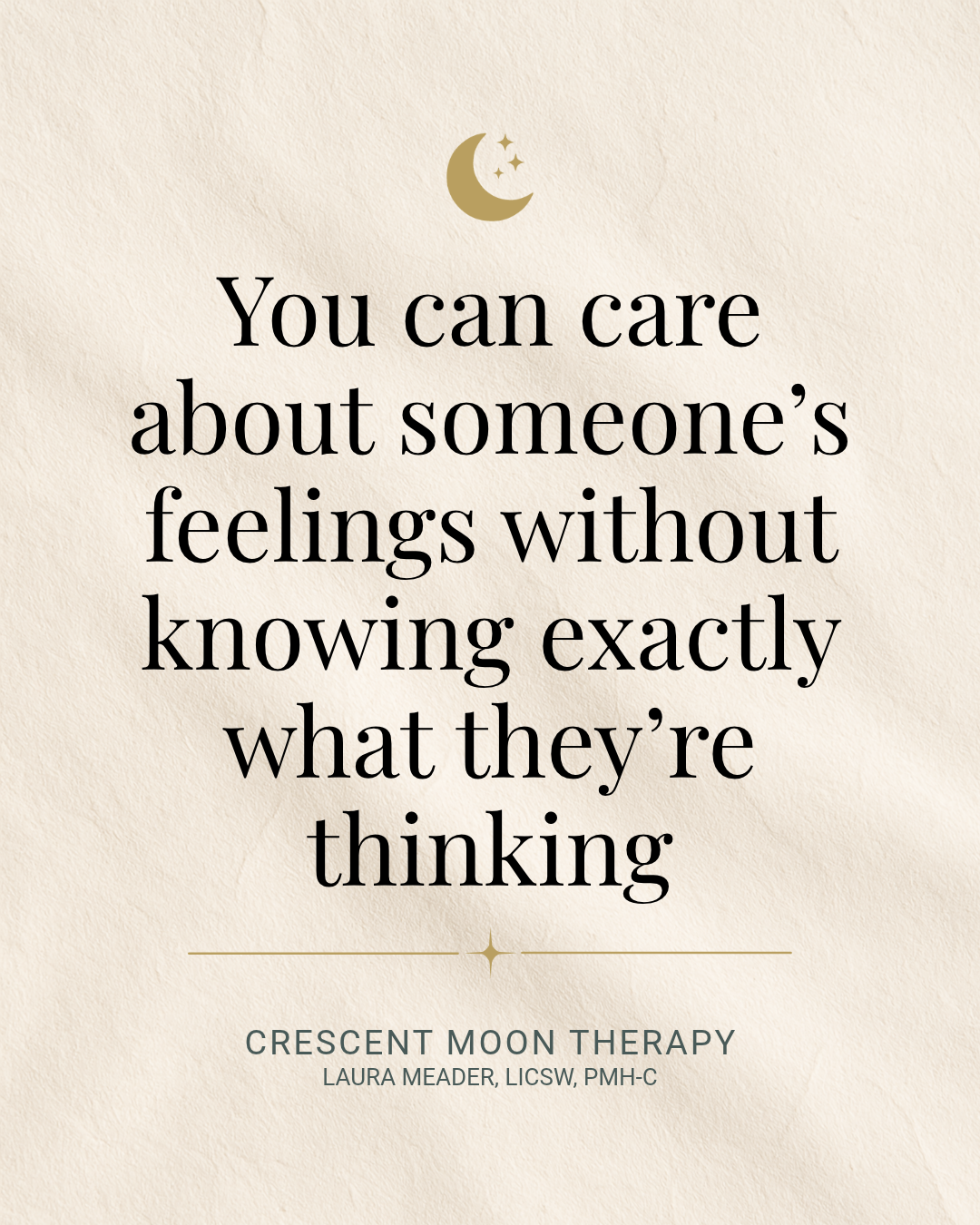
You can care about someone's feelings without knowing exactly what they're thinking.
You can disagree with someone without immediately repairing every uncomfortable moment.
And you can allow a conversation to be imperfect without assuming the relationship is in danger.
Finding More Peace in Your Relationships
Your relationships shouldn't require you to spend hours questioning every word, expression, or interaction.
You deserve to feel connected to the people in your life without constantly monitoring whether everything is okay.
At Crescent Moon Therapy, I work with women across Washington State navigating anxiety, OCD, intrusive thoughts, and the emotional exhaustion of overthinking.
Through online anxiety therapy and OCD therapy, we can explore what's keeping you stuck in these patterns, practice responding differently to uncertainty, and help you feel more grounded in your relationships.
You don't have to figure out every interaction perfectly to have meaningful, healthy relationships.
If this sounds familiar, schedule a free consultation to see if therapy feels like the right fit for you.