
Why Social Media Makes Anxiety Feel Louder
Social Media Anxiety, Doomscrolling & Overstimulation
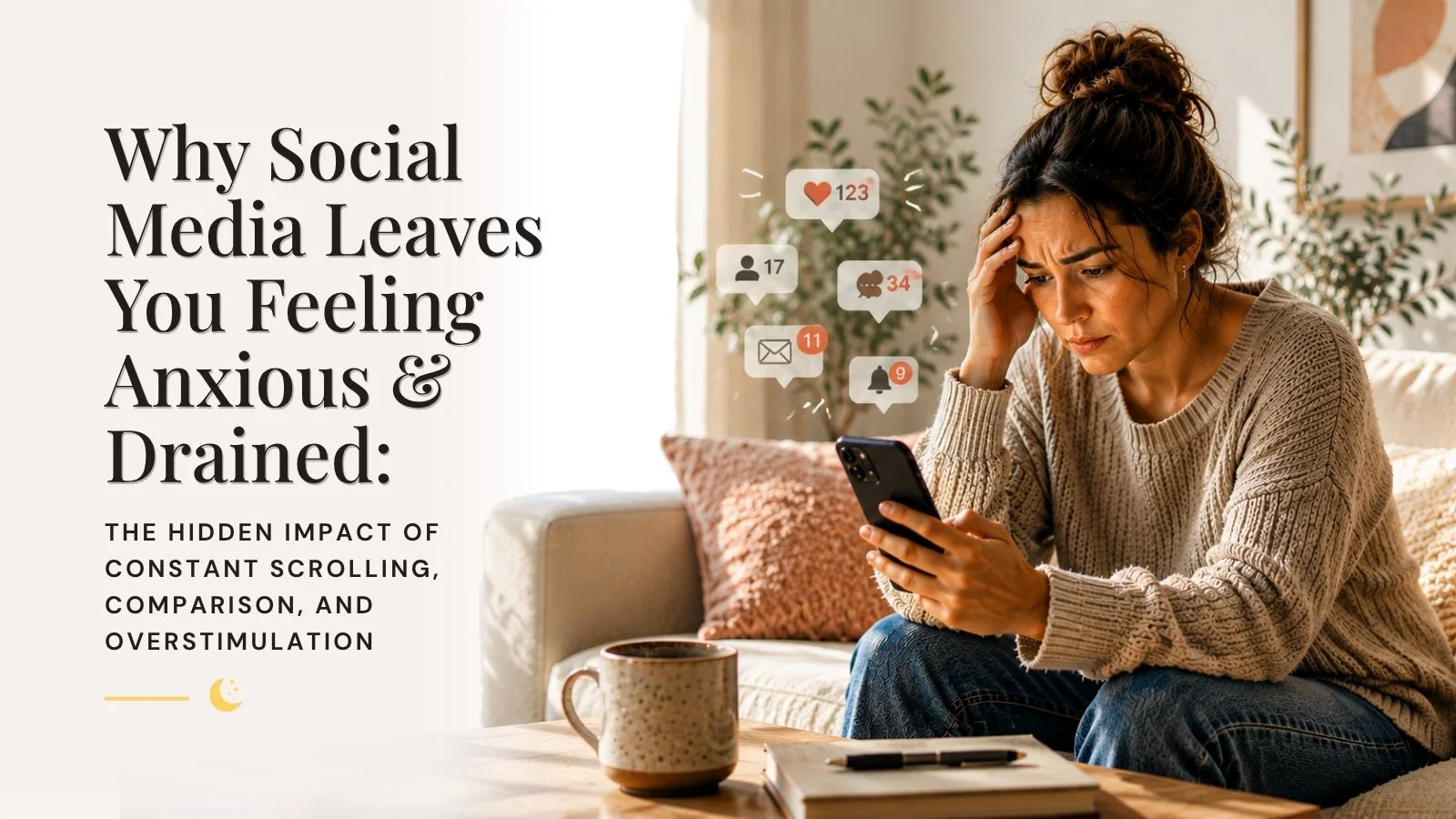
There’s a particular kind of exhaustion many women are carrying right now that can be difficult to explain.
A feeling of constantly being “on.” Constantly consuming, scrolling, absorbing information, opinions, bad news, comparisons, and pressure from every direction.
For many people, social media has quietly become intertwined with anxiety in ways they do not always recognize right away.
I hear versions of this often in therapy:
“I can’t seem to shut my brain off anymore.”
“I feel overstimulated all the time.”
“I know social media stresses me out, but I keep checking it.”
“Why do I feel emotionally drained after being online?”
Over time, constant digital input can leave the nervous system feeling overloaded.
The Nervous System Was Never Meant for Constant Input
Our brains were not designed to process the emotional weight of the internet all day long.
Yet many people begin and end their day consuming news headlines, social media updates, wellness advice, world events, productivity content, parenting opinions, and endless information from other people’s lives.
Even when the content itself seems harmless, the sheer volume of information can become mentally exhausting.
For anxious minds especially, constant input often creates constant activation, an unintentional trigger.
You may notice yourself:
- Feeling mentally restless
- Struggling to fully relax
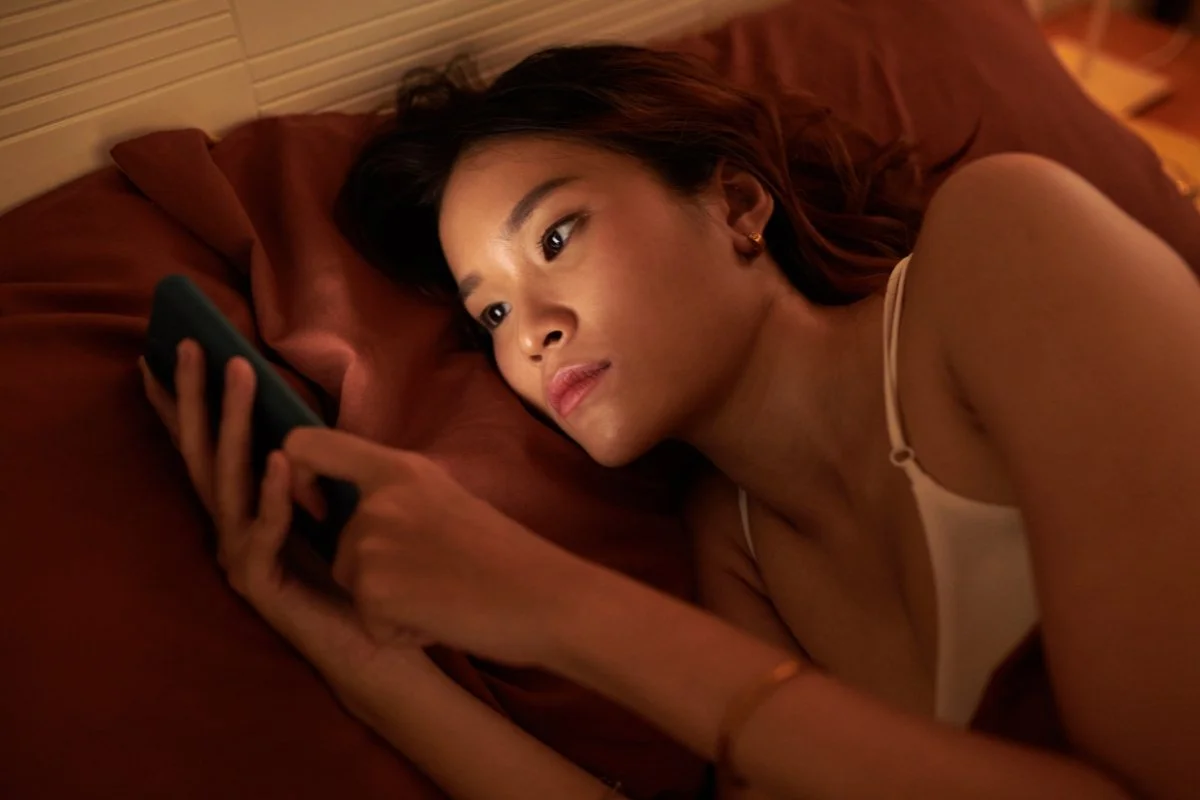
- Doomscrolling late at night
- Checking your phone without realizing it
- Feeling emotionally overstimulated
- Having difficulty being present offline
Over time, the nervous system can begin operating from a place of hypervigilance.

Why Anxiety Feels Louder Online
Social media tends to amplify the exact things anxiety already struggles with: comparison, uncertainty, fear, urgency, overthinking, and reassurance seeking.
For many women, scrolling can quietly trigger thoughts like:
“Everyone else seems happier.”
“They’re handling life better than I am.”
“Why can’t I keep up?”
“Am I doing enough?”
Even when you logically know social media is curated, your nervous system still absorbs the emotional impact.
This can become especially overwhelming for women already navigating anxiety, OCD, perfectionism, people pleasing, burnout, or postpartum mental health struggles.
The result is often a nervous system that never feels fully settled.
The Emotional Impact of Constant Bad News
Many people are also carrying an enormous amount of collective stress right now.
Political tension. Violence. Economic uncertainty. Health fears. Constant headlines. A nonstop stream of upsetting information.
The brain continuously takes in signals that something is wrong or unsafe.
For some people, this can lead to heightened anxiety, difficulty sleeping, constant worry, emotional numbness, feeling “on edge,” or difficulty concentrating.
Your nervous system was not meant to stay in a constant state of alert.

Why It Can Feel So Hard to Disconnect
Many people blame themselves for struggling to step away from social media.
Algorithms are locked in on getting clicks about things that grab our attention.
Our anxiety often convinces us that staying informed, staying connected, or continuing to check will somehow help us feel safer or more prepared.
This feeds the algorithm and also often distorts the information being presented; showing you what may feel more like threats or overwhelming content than joy or a broad view of the world.
This cycle also feeds our anxiety and need for more checking, therefore often doing the opposite of making us feel safe or more prepared.
Instead of relief, many people experience more overwhelm, more comparison, more fear, more mental noise, and more emotional exhaustion.
The cycle continues because the brain is searching for certainty, reassurance, or control.
But online spaces rarely provide those things for long.
What Can Help
This does not mean you need to completely remove social media from your life.
But it can help to begin noticing how your nervous system responds to what you consume.
You might start asking yourself:
- How do I feel after scrolling?
- Do certain accounts increase anxiety?
- Am I giving my brain any true quiet?
- Do I feel emotionally rested offline?
Sometimes small boundaries can make a meaningful difference:
- Reducing nighttime scrolling
- Limiting news exposure
- Taking breaks from certain apps
- Creating phone-free moments
- Unfollowing content that increases stress or comparison
- Bricking your phone or using other methods to have shut off moments
Allowing the discomfort to be there and choosing to engage in what you love instead:
“I’d like to know what people are doing on their trip, but I’d love to play with my kids on the floor more right now.”
“It makes me uncomfortable that I saw that notification and didn’t check it, and I’m okay waiting until after date night to look at my phone — I’m loving this connection.”
Most importantly, it can help to remember this:
Your nervous system was not meant to absorb constant stimulation all day long.
You Are Not Weak. You May Simply Be Overloaded.
Modern life asks our brains to process more information, emotion, and stimulation than ever before.
If you feel emotionally exhausted lately, constantly overstimulated, or unable to mentally slow down, you are not alone.
Therapy can help you better understand the patterns keeping your nervous system stuck in overdrive while building healthier ways to respond to anxiety, overstimulation, and emotional exhaustion.
At Crescent Moon Therapy, I provide online therapy for women across Washington State, including Seattle, Tacoma, and Gig Harbor.
I specialize in anxiety, OCD, burnout, intrusive thoughts, and the emotional impact of modern life on women’s mental health.
Schedule a free 20 minute consultation to see if therapy feels like the right fit for you.
Therapy can be a space to slow down, reconnect with yourself, and begin creating more room for rest, clarity, and emotional balance.