

When Tracking Becomes Fixating: Anxiety, OCD & the Rise of Health Data Obsession
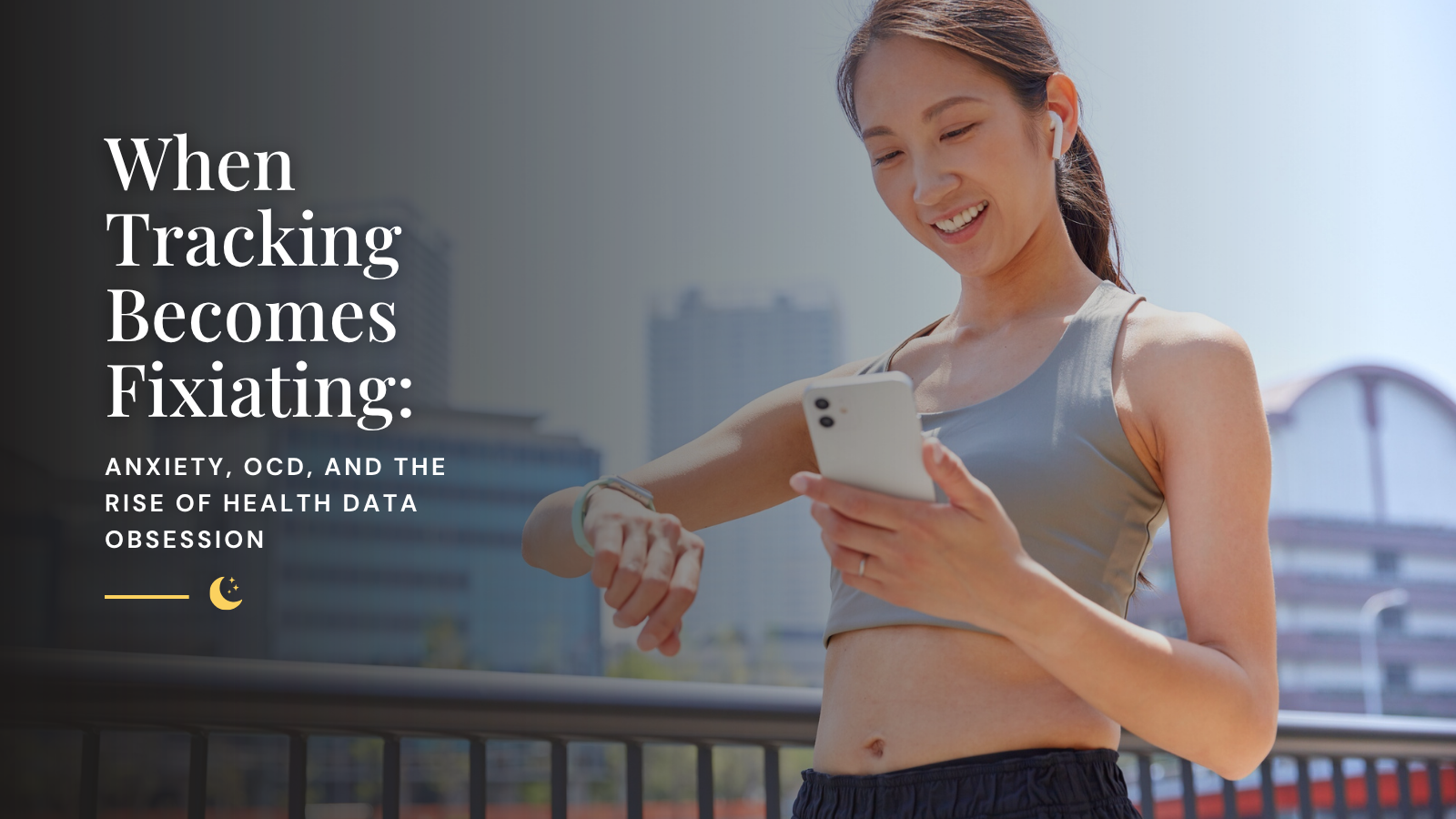
Wearable health devices have become part of everyday life.
From sleep scores to heart rate variability to readiness metrics, tools like Oura Ring, Apple Watch, and Fitbit promise insight, optimization, and control.
And for many people, they genuinely can be helpful.
But for others, especially those struggling with anxiety or OCD, health tracking can slowly shift from awareness into obsession.
What begins as curiosity can become constant monitoring.
What starts as self care can begin to feel like surveillance.
When Data Starts Running the Show
Many people do not realize how gradually this shift happens.
At first, checking metrics may feel harmless:
- Looking at sleep scores in the morning
- Checking heart rate throughout the day
- Reviewing stress data after a difficult moment
- Researching what certain numbers “mean”
Over time, though, the relationship with the data can change.
Instead of providing information, it starts providing reassurance.
And reassurance has a way of demanding more and more attention.

The Search for Certainty
One of the core struggles underneath anxiety and OCD is intolerance of uncertainty.
The brain starts looking for ways to feel safe, certain, and in control.
Health tracking devices can unintentionally become part of that cycle.
A small change in heart rate suddenly feels important.
A poor sleep score can create panic before the day even starts.
A notification about elevated stress levels can trigger spiraling thoughts like:
“What if something is wrong with me?”
“Why does my body feel off?”
“What if I’m missing something serious?”
For many people, the goal slowly stops being health.
The goal becomes certainty.

When Tracking Becomes Compulsive
Sometimes the issue is not the device itself.
It is the relationship forming around it.
You may notice yourself:
- Repeatedly checking metrics throughout the day
- Researching symptoms or data obsessively
- Feeling unable to trust your body without numbers
- Becoming distressed when metrics fluctuate
- Needing reassurance after checking data
- Spiraling when information feels “off”
For people with OCD tendencies, health anxiety, or perfectionism, tracking can become another attempt to reduce uncertainty and regain control.
But unfortunately, reassurance rarely lasts.
The relief tends to be temporary.
And the cycle starts again.

The Problem With Constant Monitoring
Our bodies naturally fluctuate.
Stress changes things.
Hormones change things.
Sleep changes things.
Life changes things.
But when every shift is monitored closely, normal human variation can begin to feel threatening.
Instead of helping someone feel connected to their body, excessive tracking can create hypervigilance.
You stop listening internally.
And start outsourcing trust to data.
Awareness vs Obsession
There is nothing inherently wrong with using wearable health technology.
For many people, it can support mindfulness and wellness in healthy ways.
The question becomes:
Is this helping me feel informed?
Or
Is this helping me feel temporarily reassured?
That distinction matters.
Because anxiety often disguises itself as “being responsible.”
And OCD often disguises itself as “being careful.”
Therapy Can Help You Rebuild Trust in Yourself
If you find yourself constantly checking, monitoring, researching, or spiraling around health data, you are not alone.
Therapy can help you:
- Understand the anxiety cycle
- Reduce compulsive reassurance seeking
- Build tolerance for uncertainty
- Reconnect with your body in a more grounded way
- Develop healthier coping patterns that are not driven by fear
At Crescent Moon Therapy, I work with women across Washington State navigating anxiety, OCD, intrusive thoughts, perfectionism, and emotional overwhelm.
You do not have to stay stuck in the cycle of checking and searching for certainty. Schedule your FREE consultation today!